
1. Introduction: The Death of the “One-Click” Magic Wand
For years, the AI video community existed in a state of perpetual anticipation, hunting for the “god model”—the single, perfect tool that could turn a sentence into a cinematic masterpiece with one click. We spent 2024 and 2025 in a holding pattern, suffering through “model fatigue” as we waited for a singular solution to solve temporal consistency, physics, and audio in one go. But as of February 2026, that dream has been replaced by a much more powerful, if more complex, reality: the high-performance toolkit.
The game shifted during the first week of February, a “Seismic Shift” week that saw the back-to-back launches of Kling 3.0 and Seedance 2.0. We are no longer “waiting for Sora” to fix every creative bottleneck. Instead, the professional landscape has evolved into the orchestration of multi-model pipelines. The modern creator doesn’t ask which model is the best; they ask which model is best for this specific shot.
This is the era of signal over noise. The sophisticated creator now navigates a fragmented market where Google’s audio-native precision competes with ByteDance’s director-level control and OpenAI’s enterprise-grade physics. Technical limitations are no longer the primary hurdle—the new challenge is mastering the stack.
2. Takeaway 1: The Rise of the “Multimodal Director” (Control > Prompts)
The launch of Seedance 2.0 on February 8, 2026, signalled the definitive end of “prompt luck.” ByteDance moved beyond the simplistic text-to-video interface, introducing a sophisticated 12-file multimodal input system. This “Multimodal Reference Fusion” allows a creator to upload nine images, three video clips, and three audio tracks to inform a single generation.
This shift prioritises “compositional control” over the randomness of a text prompt. Independent validation has already crowned this approach; Seedance 2.0 currently holds the #1 spot on the Artificial Analysis leaderboards for both text-to-video and image-to-video. By feeding the model a specific character face, a motion reference, and a localised soundscape, creators can finally demand specific results rather than hoping the AI “hallucinates” something usable.
“Seedance 2.0 represents a paradigm shift in the industry, offering director-level camera control that bridges the gap between AI generation and traditional cinematography.”
3. Takeaway 2: The 80ms Lip-Sync Barrier is Finally Broken
Google’s Veo 3.1 has carved out a dominant niche as the “Dialogue Specialist.” The technical milestone of 2026 is its sub-80ms lip-sync accuracy, a feat that makes dialogue-driven content indistinguishable from reality. Unlike earlier models that required “bolting on” audio in post-production, Veo 3.1 generates video and audio in a single pass—a native audio generation process that ensures perfect synchronisation between mouth micro-movements and sound.
The time-saving implications are massive. In a single pass, Veo 3.1 handles complex soundscapes—ambient café chatter, the specific clink of ceramic on wood—while maintaining a dialogue track with under 80ms of drift. For creators producing ads or narrative talking-head content, this eliminates hours of tedious alignment in post-production. While competitors like Kling 3.0 still hover around the 200ms drift mark, Veo 3.1 has set the professional benchmark for “one-pass” audio-visual coherence.
4. Takeaway 3: 4K/60fps is the New Baseline for “Value”
High-fidelity video is no longer a luxury reserved for enterprise budgets. Kling 3.0’s February 4 launch disrupted the market by becoming the first model to hit native 4K at 60fps while maintaining a highly accessible $6.99/month entry point. With a generous 66-credit daily free tier, Kling 3.0 has effectively democratized “professional” visual specs.
While Sora 2 and Veo 3.1 often gatekeep their ultra-high-definition capabilities behind premium tiers or closed ecosystems, Kling 3.0 has made 60fps motion the standard for social media and web content. It proves that in 2026, “value” means high resolution and smooth motion without the “Pro tax.”
*Veo 3.1 supports 60fps as a toggle that doubles credit cost and limits duration to 7 seconds. **Sora 2 entry price is bundled with ChatGPT Plus; Pro tiers for unlimited 4K are $200/mo.
5. Takeaway 4: Physics Accuracy is 2026’s Most Expensive Commodity
Despite the rise of faster, cheaper competitors, Sora 2 maintains a death grip on the title of “benchmark for physics.” While other models might lead in audio integration or creative input flexibility, Sora 2 remains the undisputed leader in simulating gravity, momentum, and complex collisions. Objects in Sora 2 maintain identity across its class-leading 25-second durations without the flickering or morphing that still haunts the more “open” API chaos of the Chinese models.
OpenAI has positioned Sora 2 as an enterprise-grade tool. With a $200/month Pro tier and a lack of a public API, it is aimed at high-end studios. This is the “Sora Tax”: you pay for absolute temporal consistency and realistic fluid dynamics. In a world of fragmented, specialized models, Sora 2 is the closed-loop ecosystem for those who cannot afford a single pixel to defy the laws of physics.
6. Takeaway 5: Model Orchestration is the Winning Workflow
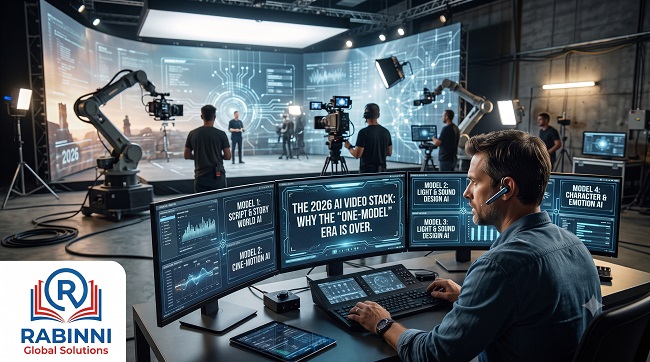
The most significant strategy emerging in 2026 is “splitting the shot.” High-end creators have realized that the “best” AI video generator doesn’t exist—but the best stack does.
The winning workflow involves generating a hero asset in one model (like Seedance 2.0 for its complex camera movement and reference adherence) and then routing that output to another model (like Kling 3.0 for its 60fps motion). This orchestration is the secret to bridging the “FPS gap”; because Seedance defaults to 24fps and Kling thrives at 60fps, creators are using frame-interpolation workarounds to maintain cinematic fluidity across a multi-model edit. By treating these models as specialised departments in a digital studio—Seedance for action, Veo for dialogue, Sora for physics-heavy effects—creators are achieving results that no single model could produce alone.
“The future of AI video is not one model replacing all others. It is model orchestration.”
7. Conclusion: The Screen is Yours
As we navigate the landscape of 2026, it is clear that the technical limitations that once plagued AI video are vanishing. Resolution, frame rate, and lip-sync are solved problems, distributed across a competitive field of specialised giants. The bottleneck is no longer the software—it is the creative direction.
With the ability to orchestrate multiple models, the definition of a “filmmaker” is being rewritten. When you have the power to control every pixel through a multimodal pipeline and sync every decibel with sub-80ms precision, a single creator can wield the power of an entire production house.
The question for 2026 is no longer “What can the AI do?” but rather, “Where will you lead it?”